Common Waters: Strengthening Community-Based Coastal and Riverine Stewardship
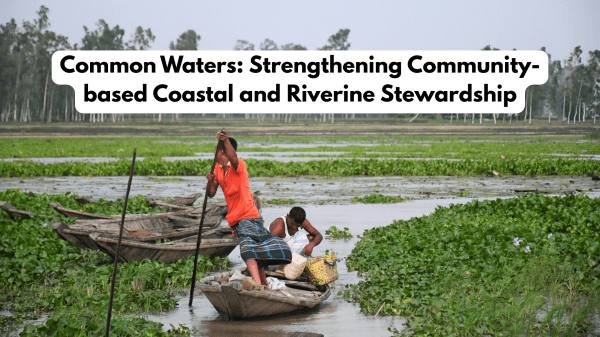






Projects supported by this request for proposal (RFP) must be community-based stewardship initiatives; they should be led by an individual with a strong connection to and/or an existing track record of work in the community(ies) where the project will take place, or by a member of the community themselves, and be designed in response to community needs. Projects can focus on a wide range of specific issues, including (but not limited to) local conservation and ecosystem restoration, climate change adaptation and resilience, or sustainable fishing/agriculture. The RFP will prioritize projects in National Geographic-Lindblad Expeditions destinations, including the Arctic, Asia, Baja California, Costa Rica and Panama, Europe and the Mediterranean, Patagonia, the Peruvian Amazon, the Pacific Northwest, Southeast Alaska and British Columbia, the South Pacific, and the United Kingdom and Ireland. For more detailed information on targeted areas within these regions, please refer to the targeted areas document.
Who Should Apply
We are looking for applicants from a wide range of professional backgrounds and encourage you to design your project proposal around your expertise and passion; our model of funding is intended to drive innovation and invite fresh perspectives. For this reason, there are no minimum academic requirements—we only expect that you are passionate and knowledgeable about your project’s subject matter. This RFP is intended to support projects that are led by an individual with a strong connection to and/or an existing track record of work in the community where the project will take place (including a member of the community themselves). For more about what makes an Explorer, please refer to our website.
Project Eligibility:
- Project must primarily focus on stewardship of coastal and riverine ecosystems.
- Candidate must demonstrate a strong connection to and/or an existing track of work in the community(ies) where the project will take place; project should be designed in response to community needs and include ongoing collaboration with the local community(ies) throughout the project.
- Candidate must select “Science” as the project’s primary discipline. This designation includes conservation and stewardship projects.
- Candidate must have a relevant academic and/or professional background in conservation or research related to the ecosystem targeted by the project. There is no minimum degree requirement.
- Projects should be based in locations that overlap with NG-LEX voyages, including the Arctic, Asia, Baja California, Costa Rica and Panama, Europe and the Mediterranean, Patagonia, the Peruvian Amazon, the Pacific Northwest, Southeast Alaska and British Columbia, the South Pacific, and the United Kingdom and Ireland. For more detailed information on targeted areas within these regions, please refer to the targeted areas document.
- Candidate must be willing to provide basic project information (including but not limited to a description of project activities, goals, or impact) that can be shared with travelers aboard NG-LEX vessels.
- Candidate must be over the age of 18.
Benefits:
- Up to $20,000 in funding for Level I grants, up to $75,000 in funding for Level II grants.
- Grant recipients become members of the National Geographic Explorer Community and eligible for a variety of future funding, learning and networking opportunities.
- Potential opportunities to be featured on LEX social media channels, and/or in the annual LEX-NG Fund Traveler Impact Report (the latest version of the Impact Report can be found here).
- Potential guest speaking opportunities aboard NG-LEX vessels.
- Opportunities to connect and collaborate with other LEX-NG Fund grantees.