What Makes Place-Based Learning Work? Six Studies Offer Practical Clues
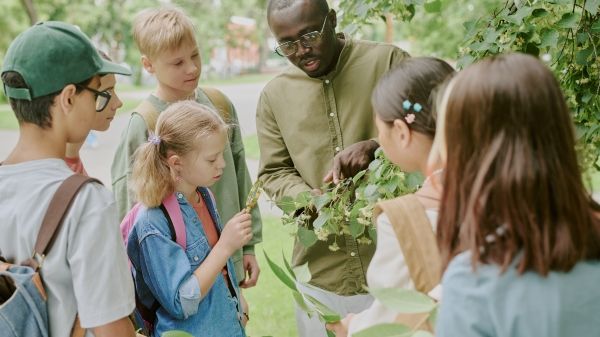





You've planned a great trip to the creek near school. The students loved it, but will it change how they think or act? And what about the students who couldn't come because there was no bus? Our new eeRESEARCH collection brings together six studies that explore questions like these. The settings include national parks in Wyoming, Great Lakes watersheds, a coastal bay in England, California gardens and farms, New Orleans classrooms, and a Woodland Cree community in Saskatchewan.
View eeRESEARCH Collection: Place-based Education
What the Research Tells Us
Give students a real say. One study of middle school watershed projects in the Midwest found that students who felt they had made real choices grew in stewardship, while those who felt they had no choice lost ground. Time outdoors alone wasn't enough. In Wyoming, high school students who designed their own winter research projects in a national park said that freedom was what they valued most.
Start with what learners already know. In New Orleans, elementary teachers opened a science unit with events their students remembered, such as flooded streets and smoke from marsh fires. California garden and farm programs asked students which plants, teas, or foods their families turn to when someone is sick. Woodland Cree knowledge keepers urged educators to see learners as already bringing knowledge with them.
Plan for heart and hands, not just head. An educator network in northwest England uses a "Head, Heart, Hands" framework to check that programs build care and action as well as knowledge. In the Midwest study, student voice and public discussion were where teachers rated themselves weakest, so they're worth planning on purpose. Students who could see their work helping the environment also gained more.
Practical details decide who takes part. Cost, transportation, and language came up again and again. California programs used sliding-scale fees, transit cards, a "walking school bus," translated materials, and staff from the communities they serve. In England, some teacher-designed materials went unused because of fixed school schedules, a reminder to bring school leaders on board early.
Most of these studies are small or descriptive, so treat them as a source of ideas rather than proof.
Try This
- Offer choices within a set topic. Even when the topic is fixed, let students choose sites, methods, or actions.
- Open with a local story. Start a unit with an event your students remember, and leave a story's ending open for them to finish.
- Give students a real job. In Wyoming, fifth graders rotated through roles like "fish biologist" and data recorder to help park scientists study invasive fish. Ask local partners what questions they need answered.
- Teach required content through your place. Explore photosynthesis through regional crops, or use local birds in both science and art.
- Lower the barriers. Try sliding-scale fees, transportation help, translated materials, or a classroom visit before a field trip so students know what to expect.
Explore the Collection
Ready to dig in? Explore the full collection and read the individual summaries, each with a Bottom Line of practical takeaways. Then tell us in the comments: How have you rooted learning in your place? What has helped more of your students take part?