Place-Based Education
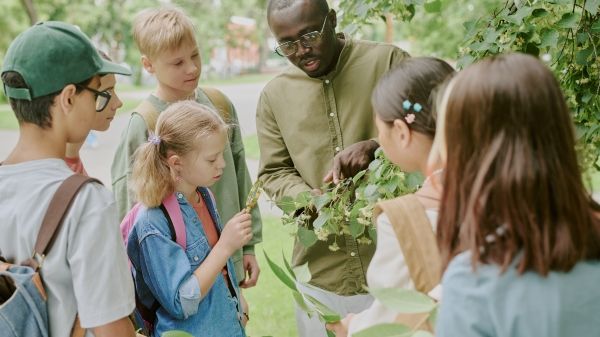

Place-based education starts from a simple idea: students learn more, and care more, when learning is rooted in the places and communities they know. The six studies in this collection look at what that idea means in practice, and at what helps or gets in the way. The settings range widely from national parks in Wyoming, Great Lakes watersheds, a coastal bay in northwest England, community gardens and farms in California, elementary classrooms in New Orleans, and a Woodland Cree community in Saskatchewan. Learners range from young children to high school students, and one study also includes adult visitors on wildlife tours.
However, the studies share a few common threads that emphasize the need for active learner participation, incorporating local stories and knowledge, planning for connection and action, and addressing practical details that may create barriers to participation. Most of the studies are small or descriptive, so read them as sources of ideas rather than proof. You'll come away with design principles, planning checklists, and concrete examples you can adapt for your own place.
For more, read the eePRO blog post: What Makes Place-based Learning Work? Six Studies Offer Practical Clues
Explore more eeRESEARCH topics
Note: The eeRESEARCH team used AI assistance to draft the research summaries in this collection. The team put together a process for using AI and for controlling the quality of the outputs. We will share more details about the use of AI for eeRESEARCH soon.
A good first stop if you're new to place-based education, or if you want a ready-made set of principles to check your own program against.
Guidelines: Instructional effectiveness, Personal and civic responsibility
Worth reading if timetables keep squeezing your outdoor time. The framework helps you spot where a program builds knowledge but misses connection or action.
Guidelines: Emphasis on skills building, Usability
A must for middle school teachers planning stewardship projects. It's a useful reality check on assuming that time outdoors will change how students act.
Guidelines: Fairness and accuracy, Instructional effectiveness
A great read for elementary teachers whose students have lived through floods, storms or extreme heat. It shows how those memories can become a starting point for science.
Guidelines: Depth of understanding, Instructional effectiveness, Personal and civic responsibility
Recommended for nonprofit program managers who want more schools to say yes. It's full of practical fixes related to transportation, cost and language that you can borrow.
Guidelines: Instructional effectiveness, Personal and civic responsibility
A thoughtful read for anyone who wants to go deeper into what "place" means. Elders' stories offer a very different way of thinking about people and land.
Guidelines: Depth of understanding, Fairness and accuracy