Songs, Snapshots, and Staged Plays: What Six Studies Say About Creative Environmental Learning
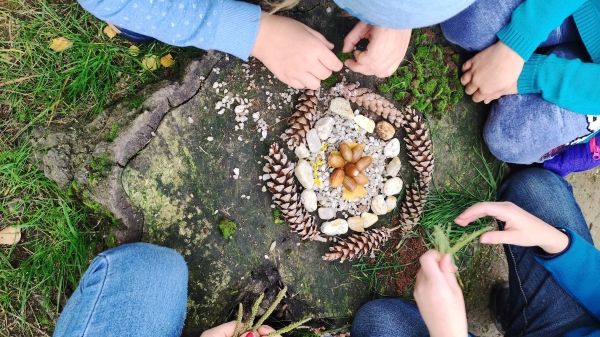






Ask most educators where the arts fit into environmental education and you'll often hear the same answer: at the end. The poster after the field trip. The poem once the science is covered. The nice extra if there's time left. Reading the six papers in this eeRESEARCH collection left me with almost the opposite impression. In the studies where creative work did the most, it wasn't the reward for learning. It was the method.
View eeRESEARCH Collection: Arts-based and Creative Approaches to Environmental Education
The collection spans storytelling, visual art, music, photography, performance and interactive installation. One paper is a systematic review of 30 youth storytelling studies from six continents. The other five look closely at single programs: songwriting camps in Saskatchewan, Canada; a photography project with young people in St. Louis, USA; a university course in Jamaica where students made art from waste; a student theater workshop in India; and a gallery exhibit about vanished local animals in regional Australia. Several themes run across them.
Where the Making Matters as Much as What Gets Made
The clearest example comes from the Canadian songwriting study. It compared writing songs at a wildlife area with learning songwriting in a classroom. Songwriting in either setting eased teens' stress and boosted creative thinking. But only the outdoor groups felt more connected to nature, and only they felt more awe. The classroom group's nature connection actually fell. Understories shows the other side of this. When the animals are gone and there's nowhere to visit, a darkened gallery room can bring their stories to people instead.
Learners as Active Participants, Not Audiences
In the studies with the strongest shifts in confidence, people were doing something rather than receiving it. In India, university students wrote and staged their own play about local environmental problems over four weeks. They came away with stronger environmental attitudes, more environmentally friendly habits and more confidence that their own actions matter. In St. Louis, young people took their own photographs. In Jamaica, students built objects from plastic bottles, old CDs, cardboard and coconut leaves. Even in Understories, where visitors didn't make art, their footsteps, phone light and stillness decided whether the animals came back.
Reflection Is the Hinge
Across the collection, the creative activity rarely did the work on its own. The storytelling review found that stories worked when educators planned them carefully and gave clear support, like story prompts or filmmaking lessons. In St. Louis, photographs were a prompt for group conversation, not the end product. The Jamaican students explained their work in writing, and the songwriting camps built in quiet time alone outdoors.
Creative Work Shows You What Learners Already Think
This was the finding I found most immediately useful. In St. Louis, young people's photos showed what they valued, like calm, color, scenery and time with others. They also showed what they didn't, like cramped spaces, traffic and noise. The organization running the program changed its curriculum in response. That points to a use for creative work beyond engagement: finding out where learners actually start, rather than assuming "environment" means wilderness.
It Doesn't Land the Same Way for Everyone
In the Jamaican study, two of the three students interviewed said they first doubted they could make art at all. Being allowed to work with the skills they already had eased that worry. In Australia, some older visitors found the interactive technology unfamiliar. And in India, many students dropped the voluntary workshop because of other coursework.
Key Takeaways for Practice
- Take the creative activity outside if nature connection is the goal. If mood or stress is the goal, the activity itself can be enough.
- Put learners in the driver's seat: writing, staging, photographing, building, or making choices with visible effects.
- Plan the reflection, not just the activity.
- Treat what learners produce as information about them, and be ready to change your program in response.
- Let people work with the creative skills they already have, rather than expecting artistic confidence up front.
- Expect uneven responses, and plan for learners who feel unsure about art, technology or the time involved.