WFF Youth Policy Board
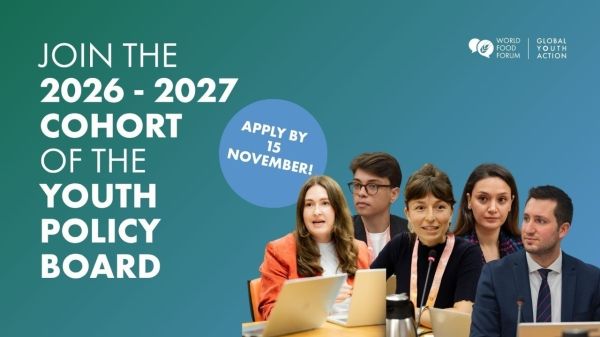






Each member of the WFF Youth Policy Board contributes expertise in one of the ten thematic areas: biodiversity, bioeconomy, climate change, desertification, land degradation and drought, fisheries and aquaculture, forestry, livestock, nutrition, water management and young women's empowerment. They lead youth consultations, design surveys and collect case studies of youth-led initiatives to identify gaps and opportunities for stronger youth participation in agrifood systems governance. These insights are translated into statements, policy recommendations, outcome documents and calls to action, which are then integrated into advocacy strategies that amplify youth priorities and feed into global policy forums.
As a member of the YPB, you will be primarily responsible for governing the WFF's Youth Assembly. Before filling out the form, please make sure that you have carefully read the YPB Terms of Reference (TOR).
Apply by November 30, 2026!
Eligibility criteria: Please refer to the YPB TORs for the full eligibility criteria.
- Age: Applicants must be between 18 and 35 years old as of 30 April 2027.
- Education: Must have graduated from high school and be enrolled in or have completed a bachelor’s degree program.
- English Proficiency: Must demonstrate C1-level proficiency in spoken and written English (other UN languages are a plus).
- Commitment: Must dedicate ~25 hours/month, attend weekly meetings and have experience or interest in agrifood systems, policy advocacy, or youth empowerment.
- Eligibility Restrictions: Cannot be FAO employees, immediate family of FAO employees, current/former WFF Young Scientists Group members, or applying for a third YPB term.
Please read the details about the application and answer each question carefully and thoroughly. Additionally, The use of AI tools should be limited to language and grammar support. Applications containing responses substantially generated by AI, rather than reflecting the applicant’s own experience, ideas and voice, will not be considered.