New Climate Storytelling Curriculum for K-12 and University Instructors Now Available



Are you a K–12 or university educator looking to enrich your climate change education curriculum? Climate Stories Project (CSP), an educational and artistic forum for sharing personal stories about climate change, has developed and released new educational curriculum to engage students with personal and community responses to climate change through narrative, interviewing, and media creation.
The curriculum materials are divided into modules, but they do not have to be used in sequence. You may choose one or more activities or lessons from different modules to be adapted to your course. For example, you may have students write and share their climate stories without having the students do interviews or media projects. The materials can be adapted for different grade levels and subjects. Elements of the curriculum have been used by elementary, middle, high school, and university teachers in subjects including Climate Science, English, Fiction Writing, Communications, Social Studies, Dance, Visual Art, and others. We welcome your ideas for adapting these materials to your classes.
The Five Curriculum Modules Are:
- Understanding climate change through recorded stories
Using climate stories and other materials on the CSP website to introduce climate storytelling and have students engage with climate change through a personal and community framework.
- Crafting and recording your own climate story
Leading students through the process of crafting and sharing their own climate stories.
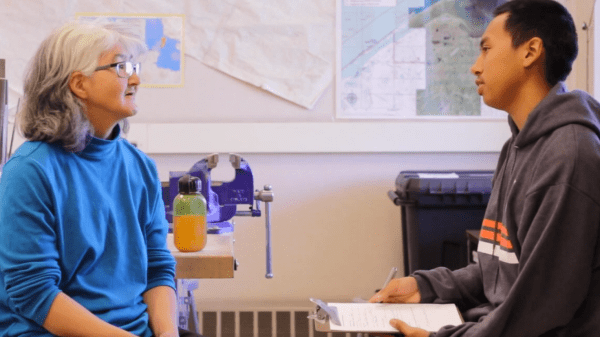
- Planning and conducting a climate story interview
Guiding students in planning, conducting, and recording interviews with others about their personal responses to climate change.
- Developing and sharing climate stories through creative media
Students use media such as documentary film, podcasts, and art projects to enrich and publicize climate stories and interviews.
- Leveraging climate stories for positive change
Students discuss and develop strategies for using climate stories and interviews to promote positive social change, such as letter-writing to elected officials and student climate summits.
Module 1 includes structured lesson plans for classroom use, while Modules 2-5 follow a project-based learning approach in which students learn through hands-on activities.
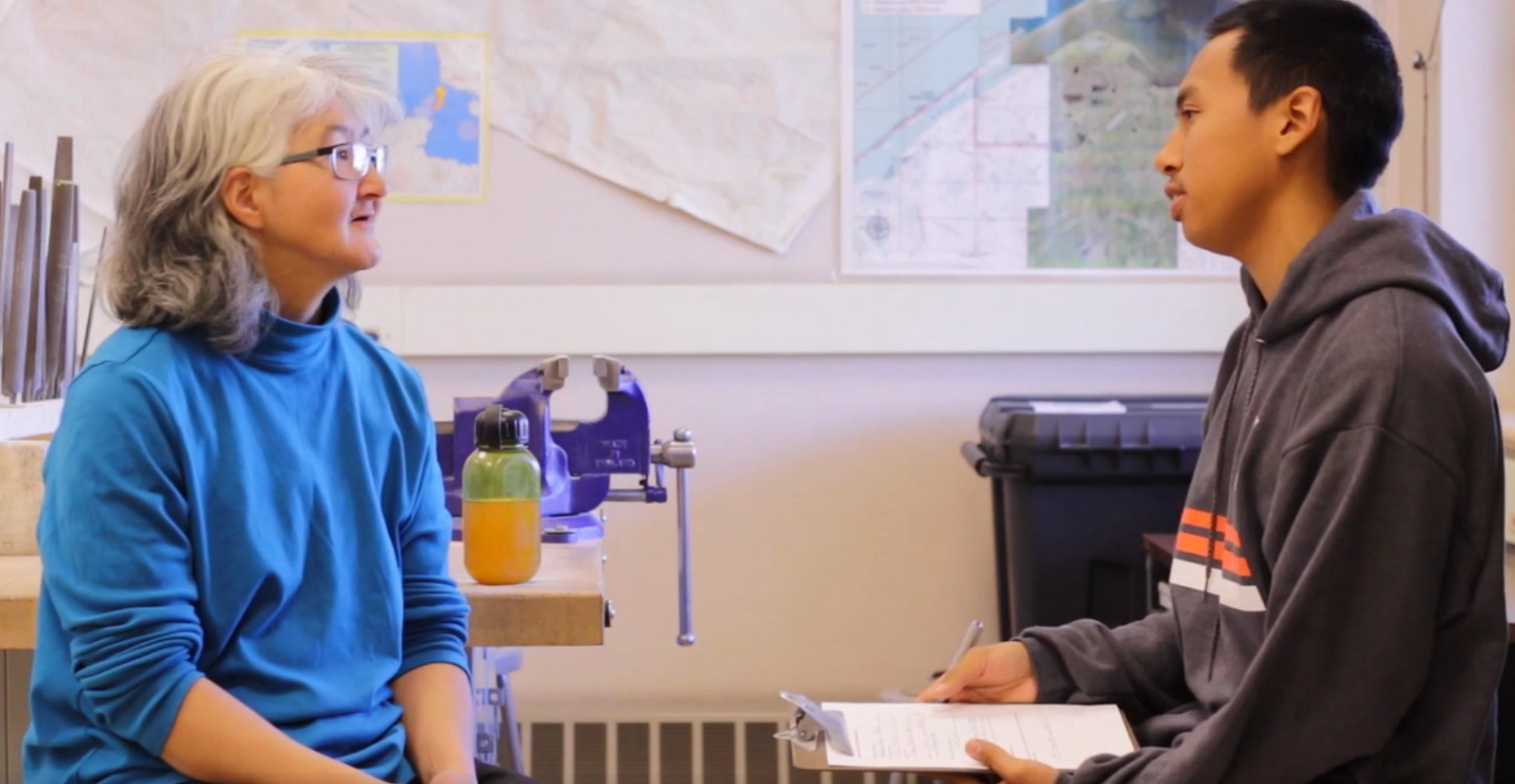
Bessie Sinnok and Isau Sinnok, Shishmaref, Alaska. Photo credit: Jason Davis
In this curriculum we also introduce the Climate Stories Project Partner Schools Network, for which teachers can connect with other educators around the world to carry out activities from the curriculum modules with students in their partner school.
Please contact us through the form on our webpage if you would like to get access to the Climate Storytelling Curriculum.