Slowing Down to Admire Local Nature with a Curated Guided Meditation
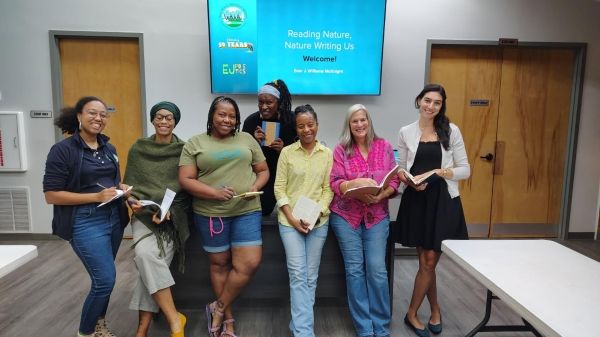


Editor's Note: This blog post was written by Chanté Lively, a community contributor.
Chanté Lively works as the Environmental Education Manager at West Atlanta Watershed Alliance. She is a graduate student with Project Dragonfly at Miami University in Oxford, Ohio. Chanté is a member of the Environmental Education Alliance, the Georgia affiliate of the North American Association for Environmental Education (NAAEE).
Look Left, Right, Up, and Down; Now Write!
We currently live in a fast-paced world where it can be difficult to unplug and see how we as humans can connect with nature. Connection to nature is a complex idea to cultivate, but the act of nature writing provides dedicated time to look around and become aware of the natural features around us (Unsworth et al. 2016, 1058). It allows individuals who do not see themselves as naturalists to create a sense of agency and responsibility in their observations and their place within the ecosystem (McClain et al. 2025, 284). Sometimes, this is their first stepping stone towards longer conservation engagement.
One way to enhance the influence of nature writing is through the practice of guided meditations. The outdoors can be a frightening place, especially for first-time visitors. By grounding individuals before the start of the writing process through guided meditations, a stage is set for participants to explore their personal relationship to the land around them, in order to help them create a sense of place, dispel fear, and gain a wider love for the ecosystem they call home (Wade 2025).
However, a deliberate emphasis on place and local community are usually missing from most meditations. Many guided meditations are generic, focusing on an imagined beach, forest, or mindscape. When using these as an introduction to nature writing and observations, it is important for individuals to narrow in on the value and uniqueness of their local spaces as a first step towards nature stewardship.
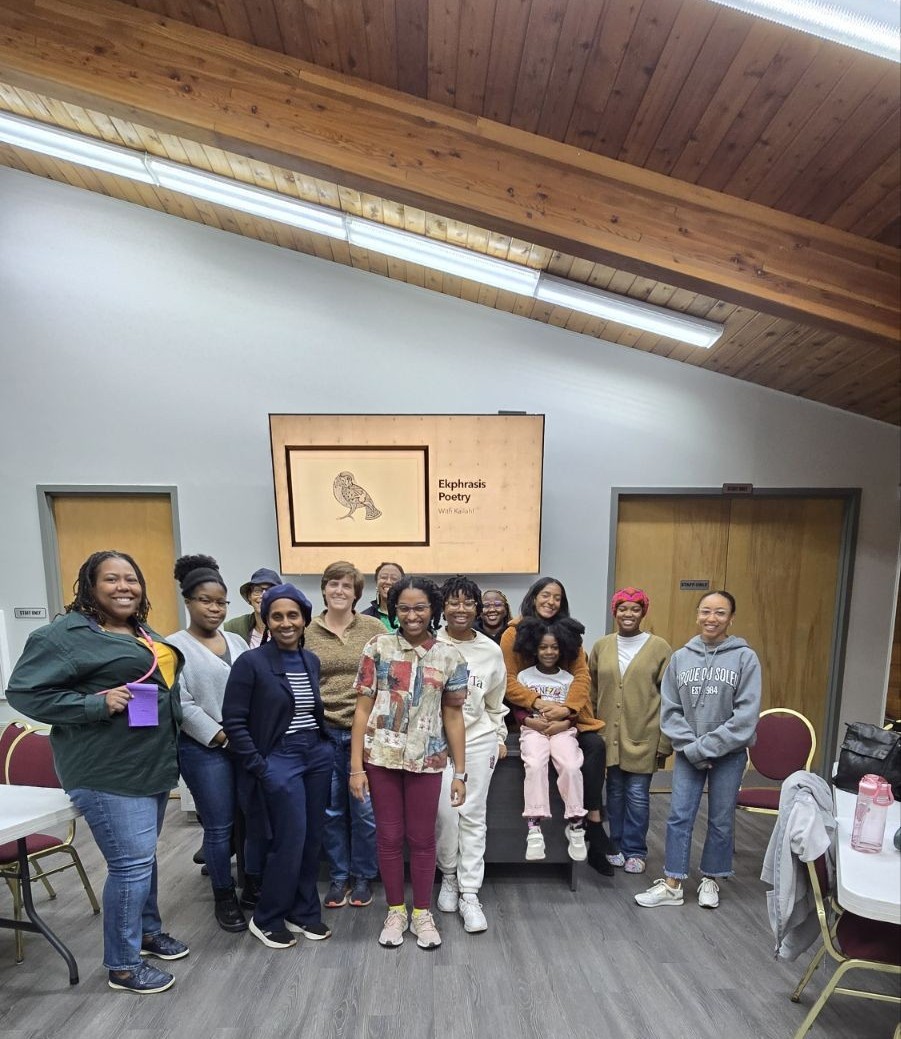
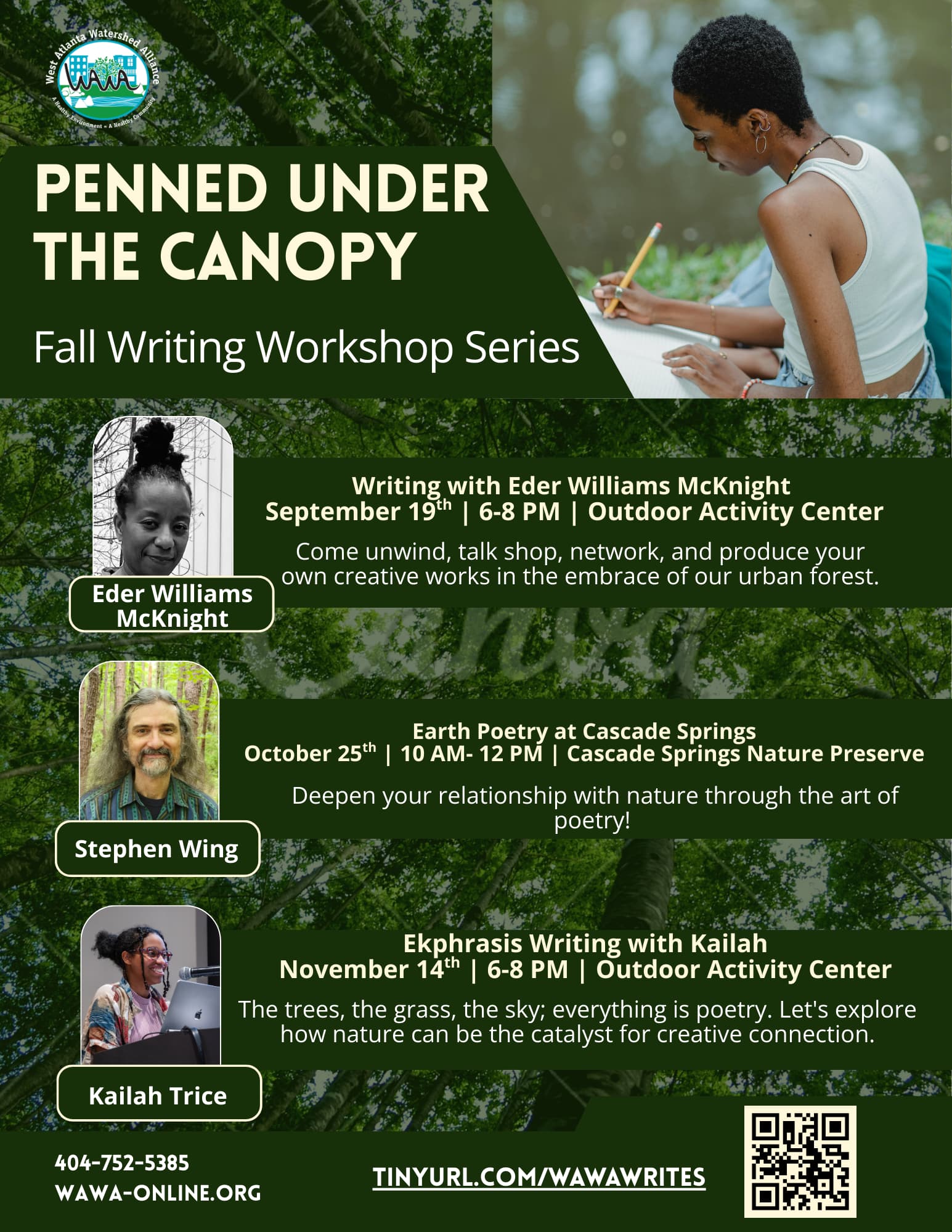
West Atlanta Watershed Alliance (WAWA) embodied this idea through three two-hour-long monthly writing workshops in Fall 2025 with Atlanta-based writers at local urban greenspaces. In the first 20 minutes before putting pen to paper, participants and facilitators started the day with a guided meditation.
Curated guided meditations are an intentional community practice to build connection to the ecosystem. While not experts, WAWA’s guided meditation was specifically curated around place-based imagery, Georgia’s Piedmont region natural features, and local history (McClain et al. 2025, 297). We wanted participants to see the beech trees, remember the Georgia red clay, and acknowledge the indigenous peoples of this land. With the combination of nature writing afterwards, we hoped participants would leave with increased knowledge about local greenspaces that they could share with others.
Create Your Own Meditation
Below is a small snippet of our larger guided meditation for others to create their own unique meditation.
Step 1: Introduce the purpose and length of the meditation
This is a meditation to deepen our sensory awareness before we begin to write. Give yourself permission for eight minutes to be one with the nature around you.
Step 2: Guide participants through bodily relaxation
Let us begin by finding a comfortable position, be that sitting or standing with your feet on the ground. Take several, slow, deep breaths; each breath filling your lungs with the air of the old-growth forest. As you exhale, soften your shoulders and let the tension melt away…
Step 3: Focus on your senses: What do you hear, smell, and eventually see?
At your next exhale, bring your awareness to your hearing. Listen to the symphony of nature that surrounds you. Allow the sounds of the forest to penetrate your being. Do not try to judge or identify the source of the sound. Listen deeply to what the forest has to say. We usually are too loud to hear her.
Step 4: Bring awareness to what is unique about your community
These lands have changed stewards from the indigenous Muskogee Creek peoples to private landowners, to parks and recreation, to everyone who is here today. Acknowledge that we are all connected and supported by this very ground that keeps us standing.
Step 5: Slowly guide participants back to the present awareness with renewed clarity
When you are ready, gently bring your awareness back to your physical body. Feel the ground beneath you once again, steady and supportive. Bring movement back to your body with another wiggle and stretch of your limbs. Lastly, open your eyes slowly. Keep your gaze low at first and gently move skyward, noticing what comes back into your awareness of the forest with your sight. Take in the beauty around you with a renewed sense of clarity and peace.
Step 6: Give a thank you for the lesson nature has just taught us
Bring to mind the final sense of gratitude. Gratitude for this moment, this connection, this community of writers who chose to spend a few hours together, for the beauty and peace of the natural world… Focus on what happens when our bodies tap into this beauty and bring it from thoughts to words on paper.
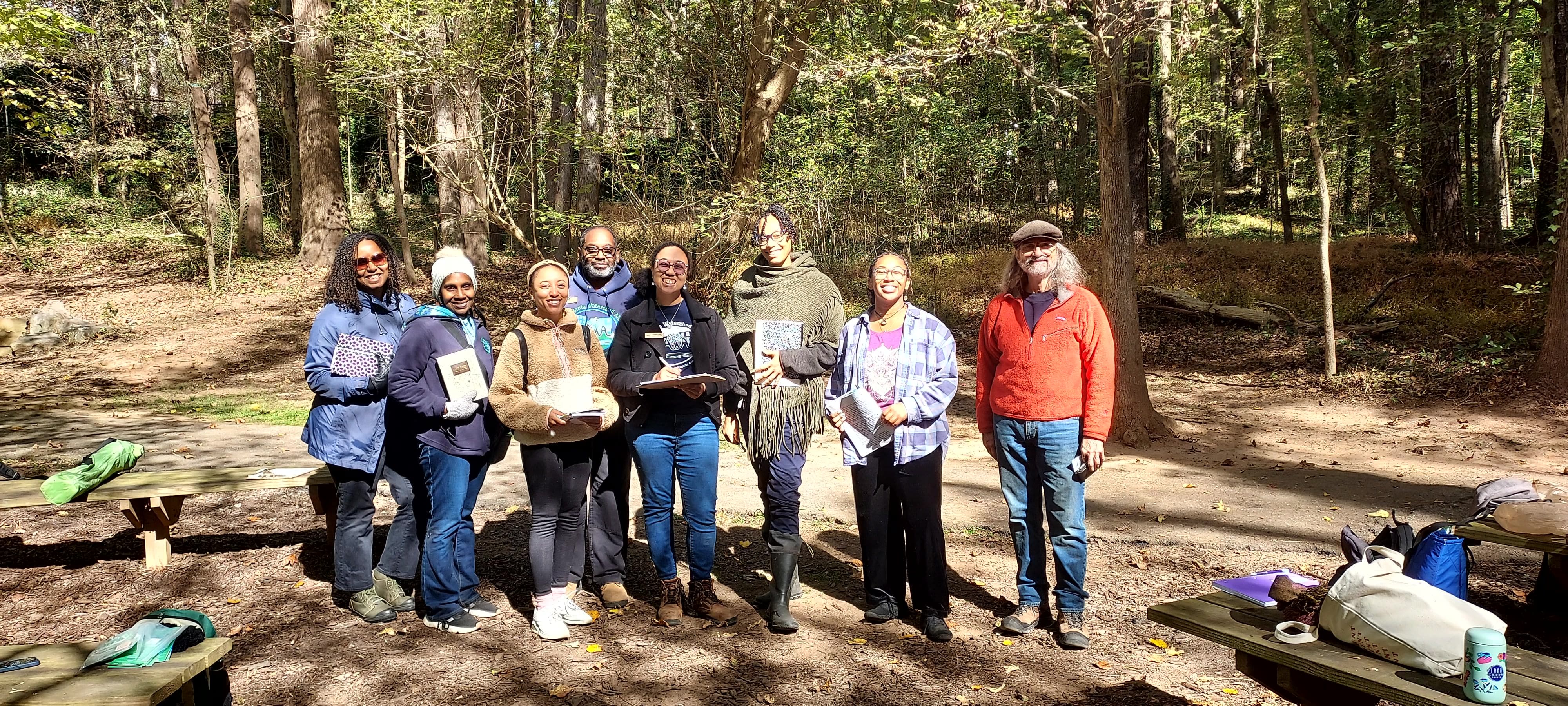
Coming out of the guided meditation, participants were seen looking at nature in a new way as their bodies visibly relaxed and acknowledged this safe space for creativity and self-expression. They were invited to look deeper into the features named or the history shared, creating a space for more questions through their writing. For example, participants’ final writings mentioned: delving deeper into the question of “I wonder why…”; focusing on sensations, such as when pockets of sunlight brush their face; or detailing activities of the ants crawling by. Usually separated from nature through a phone screen, a small action like a curated guided meditation can be a catalyst of awe, hope, and long-term engagement in an individual’s connection to their local ecosystem.