The Great Remembering: From Kentucky Soil to Global Table by Jim Embry with Jennifer Bailey



Jim Embry Carries The Great Remembering from Terra Madre into a National Joy and Justice Journey
Following his ninth Terra Madre delegation, the Kentucky author, photographer, and agrarian activist is bringing his new book, photography exhibitions, university residencies, and community study programs to audiences across the country.
RICHMOND, KY. — October 2026 — Following the completion of his ninth journey to Terra Madre Salone del Gusto in Torino, Italy, Kentucky author, photographer, agrarian activist, and community organizer Jim Embry is launching a national series of Joy and Justice Journeys inspired by his newly published book, The Great Remembering: From Kentucky Soil to Global Table by Jim Embry with Jennifer Bailey.
The Joy and Justice Journeys will extend through the remainder of 2026 and into 2027, bringing Embry’s work to universities, conferences, cultural institutions, agricultural organizations, and community gatherings. Programs can combine keynote addresses, classroom conversations, workshops, book signings, and exhibitions of Embry’s photography.
The first engagements include Boston University and the Vital Village Network, October 21–23, 2026; Tuskegee University and PAWC, October 25–28, 2026; Ohio State University, February 3–6, 2027; and Stanford University, February 22–26, 2027. Additional university residencies, community programs, photography exhibitions, and public conversations are now being scheduled.
“The Joy and Justice Journeys are an invitation to gather around the ideas in the book and put them into practice,” Embry said. “We want to create spaces where students, farmers, artists, educators, activists, elders, and young people can remember together, imagine together, and develop new pathways toward justice, healing, and ecological renewal.” Invite us to speak in your community.
A Twenty-Year Journey Through Terra Madre
Part memoir, part photographic journey, and part call to action, The Great Remembering draws upon Embry’s nearly twenty-year relationship with the international Slow Food movement and his participation in Terra Madre Salone del Gusto—the global gathering of farmers, fishers, cooks, seed keepers, Indigenous leaders, educators, young people, artists, and food activists.
Since 2008, Embry has represented the United States at Terra Madre nine times and three times as a delegate to the Slow Food International Congress/Participants Assembly. His most recent journey to Torino in September 2026 deepened relationships developed over two decades and reinforced the book’s central message: food and agriculture are powerful forces and the fulcrum point for cultural renewal, ecological healing, justice, and systems transformation.
During the 2026 gathering, Embry participated in the Slow Food Participants’ Assembly, contributed to conversations about African and Afro-diasporic food systems, biodiversity, Indigenous knowledge, seed preservation, youth leadership, and the responsibilities facing the international movement, and presented his Slow Food 2050 Vision to the Participants Assembly. This document is also included in The Great Remembering.
“The book begins in Kentucky soil, but its roots and branches extend around the world,” Embry said. “It is about remembering that food connects us to land, labor, culture, health, history, justice, and one another. Terra Madre continues to remind me that we are part of a worldwide family working to repair our relationship with the Earth and with each other.”
Six Pathways Toward a Sustainable Future
The pathways bring together:
- Earth-centered and woman-centered wisdom;
- Indigenous knowledge;
- The scientific and agricultural legacy of George Washington Carver and the African American agrarian tradition;
- Youth, art, and Hip-Hop culture;
- Seeds, biodiversity, and the Terra Madre network; and
- Transformative vision and systems change.
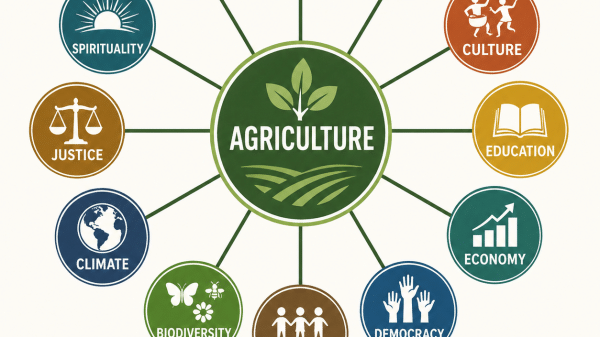
Together, these pathways support Embry’s central proposition: agriculture is the fulcrum for social transformation.
Classroom Adoption and Educational Programs
The Great Remembering is available for adoption by colleges, universities, secondary schools, community education programs, and professional learning communities.
The book can support courses and interdisciplinary programs in food studies, agriculture, environmental studies, sustainability, African American studies, Appalachian studies, sociology, public health, history, photography, visual culture, community development, and social justice.
Classroom engagements may include an author lecture, student dialogue, faculty seminar, photography presentation, food-systems workshop, or extended university residency. Faculty members and institutions are invited to inquire about course adoption, educational programming, bulk orders, and opportunities to bring Embry to their campuses.
An Invitation to Create Study Groups
Readers, Slow Food chapters, community organizations, faith communities, garden groups, schools, book clubs, and food-justice networks are also encouraged to organize study groups around The Great Remembering.
A companion study guide provides questions, reflections, and activities designed to help groups explore the book’s major themes and connect them with the history, culture, food systems, environmental challenges, and possibilities within their own communities. These study groups are intended to move beyond reading alone. Participants are encouraged to identify local resources, document community stories, celebrate farmers and food workers, explore the Six Pathways, and develop practical projects that advance joy, justice, biodiversity, and ecological restoration. Invite us to speak in your community
“This is not a book that I want simply to sit on a shelf,” Embry said. “I hope people will gather around it, challenge it, add their own stories, and use it as a starting point for meaningful action. The remembering becomes powerful when it leads us into relationship and transformation.”