Data in the Classroom
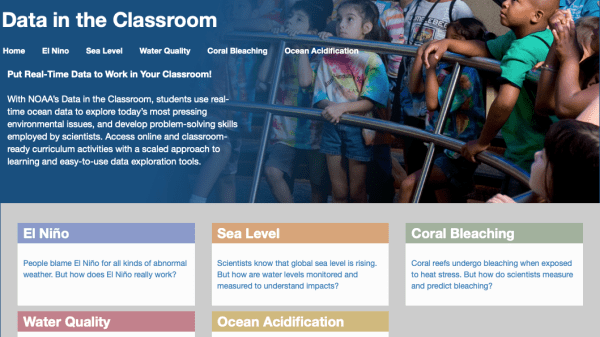




With NOAA’s Data in the Classroom, students use real-time data to explore important environmental issues (El Niño, sea level rise, coral bleaching, water quality, and ocean acidification), and develop problem-solving skills employed by scientists. Access online and classroom-ready curriculum activities with a scaled approach to learning and easy-to-use data tools. Teaching resources for each issue area include a Teacher’s Guide, Supplemental Power Point, Student Activity Sheets, and Science Standards Correlations.
Data in the Classroom (DITC) is an incredible way to start teaching with scientific data from NOAA. DITC breaks data down into its fundamental components and starts by answering basic questions like what are x and y axes? And what is a false colored map? Once students become more comfortable with what data is, they are taught how to find, use, and interpret data, finally concluding with a research project they design themselves. DITC is flexible and can be used in whole or in part, depending on what works best for your students.
Learn about Data in the Classroom
Educating people about the importance of fresh water and marine ecosystems is a great way to involve local communities, educators, and students in addressing environmental issues at local, regional, and global scales. Use the resources in this collection to educate people about marine debris, use real-time data to study El Nino, sea level rise, coral bleaching, water quality and ocean acidification, or go on virtual field trips to our nation's National Marine Sanctuaries. Water is everywhere and it touches all of us every day in many ways. Use these resources about water to bring your environmental education programs to life and make them relevant to everyone! View more resources in the Water Quality & Marine Education PRO Picks Collection>