Biodiversity Education: Cornell University Global Online Course



Biodiversity Education: Cornell University Global Online Course
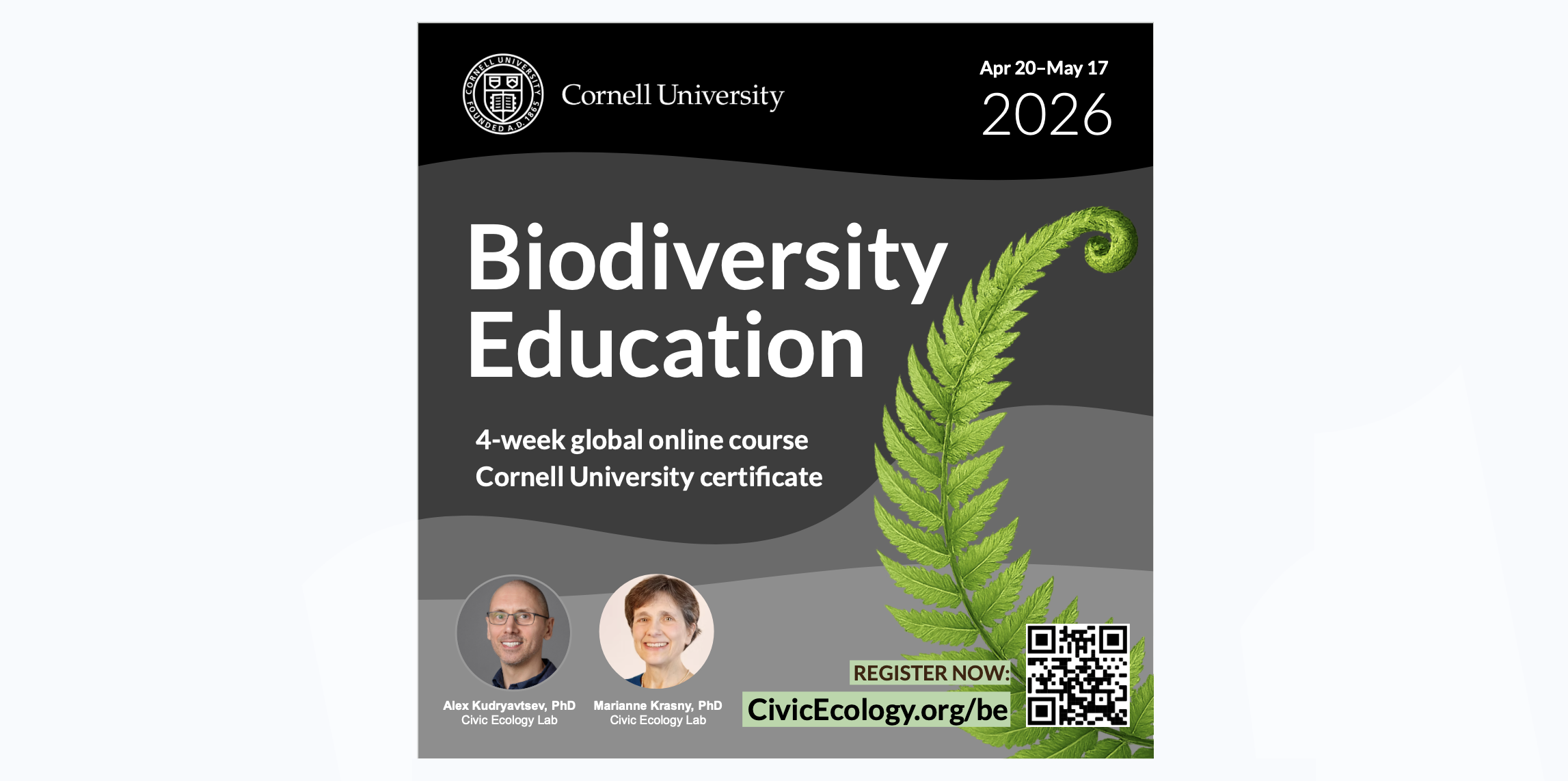
Biodiversity loss can feel overwhelming. But educators, organizations, and communities can help people move from awareness to stewardship and action. Cornell University’s Civic Ecology Lab invites you to join Biodiversity Education, a 4-week global online course (April 20–May 17, 2026) designed to turn biodiversity concern into meaningful education, collaboration, and practical local action.
This course is designed as a guided learning community, not just a set of materials. Through weekly modules, peer discussion, case conversations, and optional live sessions, you will explore how biodiversity education can be engaging, locally relevant, and connected to real-world efforts such as habitat restoration, community science, pollinator support, watershed care, and place-based stewardship. In addition, the value is not only in content, but also in feedback, discussion, and seeing how others are approaching biodiversity education in their own places.
- Dates: April 20–May 17, 2026
- Format: asynchronous weekly modules + optional live sessions (recorded)
- Time commitment: about 25 hours total
- Credential: Cornell University certificate documenting 25 professional development hours
- Final project: a practical biodiversity education or stewardship activity plan for your setting
- Learn more and register >>
What you’ll do (and walk away with)
Using your classroom, organization, campus, or community as a starting point, you will:
- Explore research-informed approaches to biodiversity education linked to action.
- Examine how biodiversity connects to place, stewardship, ecological systems, and public engagement.
- Discuss ideas with Cornell instructors, invited speakers, and peers from different sectors and countries.
- Develop a project you can adapt locally, such as a schoolyard habitat activity, local species lesson, community bioblitz, pollinator initiative, youth stewardship project, or urban greening effort.
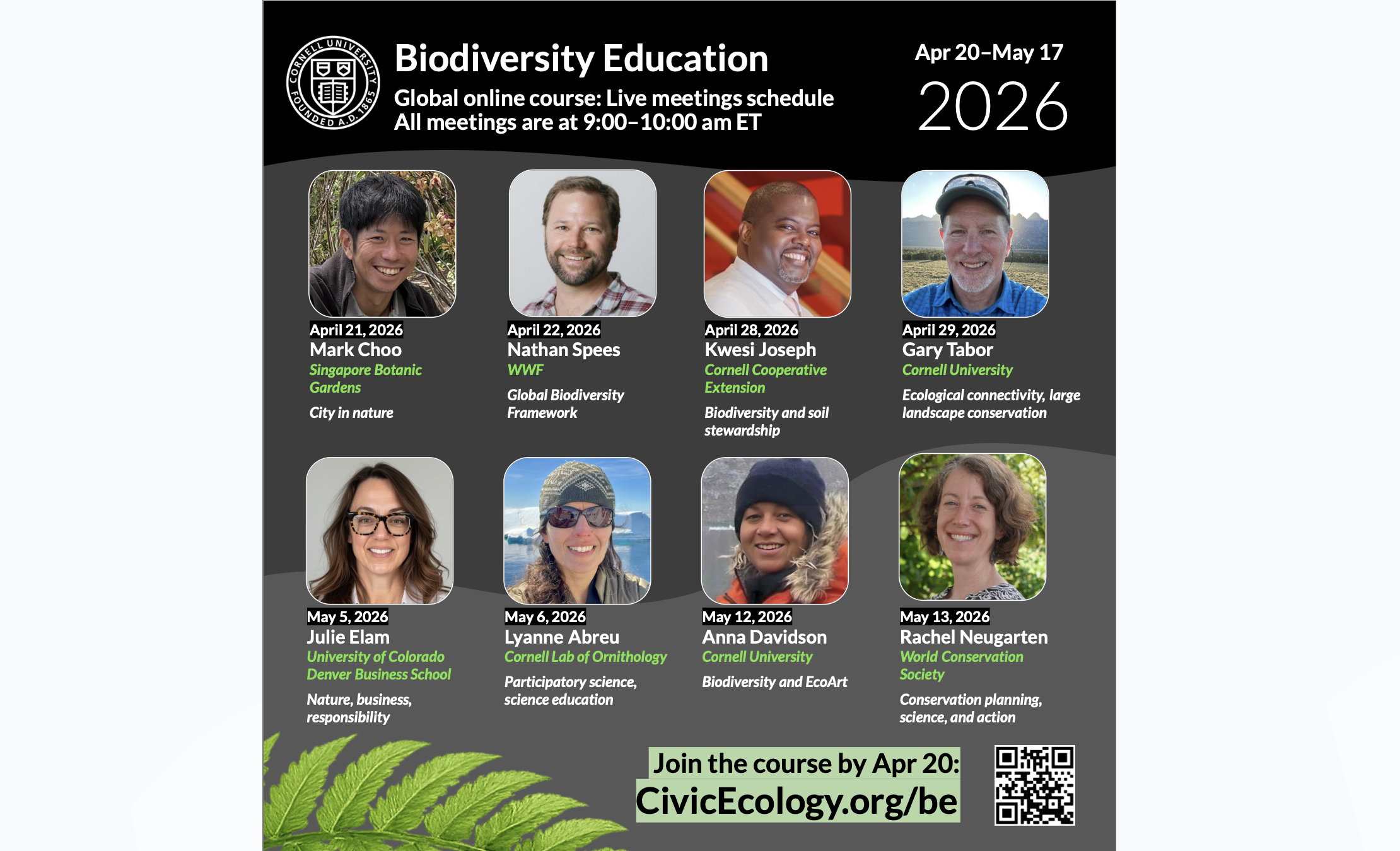
This course includes a strong lineup of optional live webinars with guest speakers from leading organizations in biodiversity, education, conservation, and stewardship. These sessions add practical examples and fresh perspectives that can help strengthen your own biodiversity education and stewardship efforts.
The course is designed for school and nonformal educators, museum, zoo, aquarium, garden, and park educators, sustainability and conservation practitioners, university educators, community leaders, volunteers, students, and early-career professionals. Tuition is tiered to support global participation: $90 standard tuition and $20 reduced tuition for participants in all other countries, plus a limited number of scholarships. Scholarship applications are due April 14, 2026. If you want fresh ideas, practical tools, and a supportive global community working on biodiversity education, we would be glad to learn with you.