Art and Environmental Education
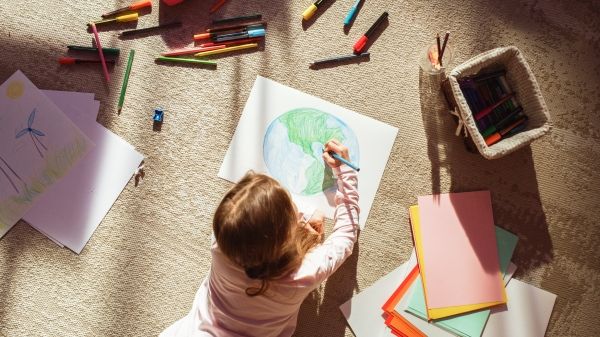



The arts can help learners connect with the natural world, while also providing a compelling medium for environmental messaging and community engagement. Integrating the arts in environmental education helps stir emotion and personal meaning, while stimulating creativity and critical thinking. Additionally, visual arts, music, and storytelling can help learners process the complexities of environmental issues and translate them into stronger motivation for environmental action.

These resources are practical, engaging, and easy for educators to adapt to different grade levels. They encourage students to observe nature carefully and use art to document, interpret, and share what they discover.
Guidelines: Depth of understanding, Emphasis on skills building, Instructional effectiveness, Usability

We recommend this resource because it helps educators see art and science as complementary ways of understanding the world. Its adaptable strategies can engage students with different interests, strengths, and ways of expressing their learning.
Guidelines: Depth of understanding, Emphasis on skills building, Instructional effectiveness, Usability

I recommend this resource because it helps students recognize that meaningful encounters with nature can happen anywhere. Photography allows learners to document their communities, question their definitions of nature, and communicate environmental stories from their own perspectives.
Guidelines: Depth of understanding, Emphasis on skills building, Fairness and accuracy, Personal and civic responsibility

I recommend this resource because it provides educators with everything they need to begin using nature journaling without having to develop a curriculum from scratch. It connects creative expression with scientific inquiry, environmental understanding, and care for one’s local community.
Guidelines: Depth of understanding, Emphasis on skills building, Fairness and accuracy, Instructional effectiveness, Personal and civic responsibility, Usability

I recommend this resource because it helps students recognize that meaningful encounters with nature can happen anywhere. Photography allows learners to document their communities, question their definitions of nature, and communicate environmental stories from their own perspectives.
Guidelines: Depth of understanding, Emphasis on skills building, Fairness and accuracy, Personal and civic responsibility

This resource connects environmental learning with student voice, creativity, and civic engagement. It moves learners from observing and interpreting art to communicating about an issue that matters to them.
Guidelines: Depth of understanding, Emphasis on skills building, Fairness and accuracy, Instructional effectiveness, Personal and civic responsibility

I recommend this lesson because it gives students an active and creative way to represent an environmental process that is difficult to observe. Dance makes scientific thinking physical, collaborative, and memorable while giving students another way to demonstrate understanding.
Guidelines: Depth of understanding, Emphasis on skills building, Fairness and accuracy, Instructional effectiveness, Usability
