
April 2026
Poet and nature writer Aimee Nezhukumatathil joins The World We Want host Gerry Ellis to talk about curiosity, observation, poetry, and the quiet heart of environmental education. This conversation explores how noticing the natural world—naming birds, listening at night, and staying curious—can shape how we learn, teach, and care for the environment.

Get Aimee's new book of poems, Night Owl, and check out all her books!
What does it mean to really notice the world around us?
In this episode of The World We Want, host Gerry Ellis speaks with poet and nature writer Aimee Nezhukumatathil about curiosity, attention, and the role that observation plays in environmental education and our relationship with the natural world. Aimee’s work explores the connections between poetry, science, nature, and memory, and how naming plants, animals, and landscapes helps us build a deeper connection to the places where we live. Her latest book, Night Owl, looks at the natural world after dark and invites readers to slow down, listen, and rediscover a sense of wonder and curiosity about the living world around them. This conversation explores the quiet heart of environmental education—not just learning facts about the environment, but learning how to pay attention, how to ask questions, and how to remain curious about the world throughout our lives. We talk about nature writing, teaching, curiosity, naming species, childhood wonder, and how observation can lead to care, connection, and lifelong learning. This episode is about noticing, curiosity, poetry, and our shared relationship with the living world.
About the Guest Speaker: Aimee Nezhukumatathil
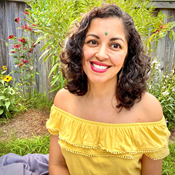 Aimee Nezhukumatathil is the New York Times best-selling author of the poetry book, Night Owl (Ecco, 2026), and two illustrated collections of essays, Bite by Bite, and World of Wonders: In Praise of Fireflies, Whale Sharks, & Other Astonishments, which was chosen as Barnes and Noble’s Book of the Year and named a finalist for the Kirkus Prize. She also wrote four previous award-winning poetry collections: Oceanic, Lucky Fish, At the Drive-In Volcano, and Miracle Fruit. With the poet Ross Gay, she co-authored the chapbook Lace & Pyrite, a collaboration of epistolary garden poems. Her writing appears twice in The New Yorker, The Nation, the Best American Poetry Series, The New York Times Magazine, ESPN, Poetry magazine, American Poetry Review, and The Paris Review.
Honors include a poetry fellowship from U.S. Artist Fellows, the National Endowment for the Arts, the Pushcart Prize, a Mississippi Arts Council grant, and a Guggenheim Fellowship. For a decade, she served as the poetry editor for Orion and Sierra magazines. A professor of English and Creative Writing for over twenty five years, she also serves as a firefly guide for Mississippi State Parks.
Listen Now





Transcript
[AIMEE NEZHUKUMATATHIL]: What do you love? What do you love? And oftentimes my students haven't had anybody ask them that when it doesn't involve, like you know, that cute sorority girl over there or something like that. No. What do you love on this planet? Do you love the smell of rain? Do you love a certain pool of clouds? You've got to tell me what bird you love, you know, that kind of thing. What trees do you love?
[GERRY ELLIS]: Today on The World We Want, we begin with a simple idea, noticing. Noticing as an active verb. Noticing as a way of moving through the world. Noticing as the beginning of curiosity, of care, and of loving the world around us. Hi, I'm your host Gerry Ellis. And on this episode of The World We Want, my guest is Aimee Nezhukumatathil. Aimee is a poet whose work invites us to slow down, to pay attention, to notice the color of a bird's wing, the sound of a frog's voice at night, the small living details that most of us pass by without a second thought. Her writing moves between science and poetry, between naming and wonder, between the deeply personal and the beautifully universal.
In her newest collection, Night Owl, she turns her attention to the world after dark. A space that for many of us feels unfamiliar. But for Aimee, it's alive with sound and imagination and possibility. Our conversation is about what it means to stay open to the world, to remain curious, to remember what we loved as children, and rediscover and help our students rediscover our connection to place within the living community around us. So let's begin there, this time on The World We Want with Aimee Nezhukumatathil.
Hi Aimee and welcome to The World We Want. We are so delighted to have you kicking off our second season.
[AIMEE NEZHUKUMATATHIL]: Thank you so much. I'm so happy to be here.
[GERRY ELLIS]: You've got a new book coming out called Night Owl and we're going to talk about that and talk about some of your previous work. I'm excited to dig into all of it because so much of it hits at my own heart as I feel like I'm a little eight-year-old boy wandering through the world with exploding curiosity all the time. But the thing that one notices immediately when reading any of your work is noticing is such an active verb for you. It's like it just kind of glows from everything you do. So, I wanted to ask you, what have you noticed today?
[AIMEE NEZHUKUMATATHIL]: Oh, that's so interesting. I, um, well, gosh, that question is right up my alley. Uh, I just came out from, uh, partially while I was running here a little ago, I was finding my headphones and then I have a little rescue chihuahua who would not come in. It was like, she knew, ‘oh, you have to do something? I'm going to just lollygag a little bit longer.’ But while she was doing that, I noticed that we have this incredible vine here that signals the start of spring and it's called Carolina Jessamine.
And just over the weekend, it’s suddenly like the buds are green and then they're swollen to full on yellow. In the next day or so, there are gonna be these yellow trumpets on the vine. And I'm so excited because hummingbirds love them, bees love them. It's native here to the South. Um, and that is the– you know, they say once that blooms, you could start planting and it feels I'm so excited about that, but I'm also horrified because that usually at the earliest happens early April and this is you know I mean it's it's very early here so and you know there's other markers like, um, the Red Buckeye, that also has flowers on it. That's supposed to also signal, when the Red Buckeye has flowers, you could set out your hummingbird feeders because hummingbirds are due to come back in the next week or so. Those sprouted this past weekend. I mean, the Blooms opened this past weekend. So I'm so excited because, you know, spring and summer are my favorites. And at the same time, very nervous and this should not be happening in the month; at least this early in March, you know, that kind of thing. Just off the top of my head, that was from the backyard this morning.
[GERRY ELLIS]: There's that boundary between science and just the joy of what you see, you know, the nature of what you see. And what you were just describing with this kind of harbinger of spring and it being early dips into the science part of it, but then the joy of just seeing that bud. And I wanted to ask you, for you, when you're writing or even imagining, before it even becomes scribbled words on a page, and it's dancing in your brain. Does the science come first? Does the poetry come first? Does the awe and wonder? I mean, which one drives which and is it the same all the time or–?
[AIMEE NEZHUKUMATATHIL]: Yeah, yeah, I love this question because it's, I think it's a common, a common thought, especially for nature writers where others think, I just walk around feeling awe and wonderment all the time, you know? And I think, um well, one, I'm here to dispel that notion. Spoiler alert, I do not. But when it comes to writing, I love just taking notes. I always say mother nature is the best poet. And I'm just trying to take notes from that. And what I mean by that is I want to get the exact, see if I could describe the exact shade of violet on the wing of a crow or um the sound, if I can capture that sound somehow on the page. I always start with images first. So for me, images are not just visual, but the texture, the taste, not of wildlife, but you know, all of the five senses. And then it's only after kind of writing, really trying to render that on the page, then I realized, this reminds me of this, this reminds me of this, and that's when I go into metaphor. So rather than the opposite, where I think sometimes people think poets, nature writers walk around almost like with a metaphor basket, like, let me see what I could get today and put in my metaphor basket. That's absolutely not what I do in the slightest. But I just like, I just love taking notes and some of it goes into a poem, some of it doesn't. I just love journaling and remembering what I noticed that day, who I was with, that kind of thing. And then sometimes poetry and essays come out of that, sometimes they don't.
[GERRY ELLIS]: You know, walking around with a notebook is a very scientific thing to do as well, and taking notes. I mean, you think about some of the great naturalists of past times and today and past, and they've left us with these amazing journals. In some cases of what they just saw in their backyards every day, you know, their more extended backyards. And that's one of the things that I wondered about as, I mean, I come from a documentary background of filmmaking and photography. And I was thinking over the weekend about our conversation today and I was thinking, if I was following you around, what would you be scribbling? What would I be trying to film you taking a note about this or taking a note about that? Is it a mental process or is it, or are you actually taking, do you have a notepad and you scribble, sit for a moment and scribble notes?
[AIMEE NEZHUKUMATATHIL]: You know, sometimes I do, sometimes I don't. I mean, sometimes I, you know, it depends on, you know, if I'm out hiking, you know, I'm thinking this past summer, we were in the Tetons and Yellowstone and I was on full on bear alert, you know, trying to like make sure. So there are no notebooks there. I'm just keeping as alert as possible. And that's a different kind of being alert and aware of your surroundings, that kind of thing. Sometimes I do just, always you know, walk around with a little notebook, a little pen. Um, I try as much as possible to not take pictures while I’m out because I really want it to be, unless it's something that, I'm trying to think, what is my litmus test? If something's moving, maybe I try to take a video of it, but if it's still, and I want to capture the motion and they're gone, you know, that kind of thing, the way like a salamander or the way a blue-tailed skink will just shimmy. Maybe I'll take like a three second video. Otherwise, I'd really just try to remember it or to write it in a notebook. And as far as what someone might be seeing, I mean, you'll see just like a... I mean, it's almost embarrassing. Almost everything I do is in color. I mean, you know, literally and figuratively. So I'm always trying to capture colors down, inventing new colors. If I have a big enough bag that I've brought my colored pencils with. I try to do sketches. And I don't know what it is. It's something about color. I could almost do shorthand with color and I'll remember what that fern looked like. If I could just say, it was celery green underneath and then spotted with burnt umber on the top, I'll remember. That'll be more helpful to me than saying this fern was about the length of my hand, you know, that kind of thing. Like um, I don't know, there's something about color that if I can render color or if I can render smell, those are the two things. If I can color, render, or smell, those are the two things that I could take back with me and write about, you know, years later even.
[GERRY ELLIS]: Color is an interesting one. Do you find that in English it just feels inadequate to describe the range of colors, the wealth of colors that we have in this world?
[AIMEE NEZHUKUMATATHIL]: Oh yeah, one hundred percent. I mean, I'm always so jealous of the animal. I'm sure things like octopus and various shrimps under, you know, under the ocean, on the ocean floor have many more color combos than what the human eye could process. So in another lifetime, I would love to come back as one of those animals that has triple the amount of colors in their, what is it, rods, retinas? I should know that by now. And process the world in that way. Oh my gosh, that would be, it would almost be overwhelming.
[GERRY ELLIS]: It's interesting you brought up an octopus because they, I mean, what an amazing creature. Not only the colors that they are able to deal with see, but change. And then the fact that they can taste with their feet, you know, and their legs. I mean, there's this, the range of senses that come at them. The reason I asked the question is because I've talked to over the last year or so, I've seemed to have talked with a lot of teachers, who have now got their students partly inspired by you, gotten their students journaling and drawing and to try to engage them more deeply in the world around them and bring alive that verb “noticing”. I wonder if we have to give people permission to imagine more.
[AIMEE NEZHUKUMATATHIL]: You know, I think it's not even necessarily permission. I think it's just, it's um, it's encouraging them to remember what they loved as kids. I don't know anybody who didn't learn picking up a crayon or a pencil. You know, the first when we all first learned to write, I don't know about you, but everything was in capital letters. So it seemed like we're shouting into the world like; MY NAME IS AIMEE! I SAW A PINE CONE! You know, I mean, it's just that mimics a kid's joy and excitement over an exclamation. Something happens in middle school or high school where suddenly it's not cool anymore to notice things or it's not cool to exclaim. I don't know for some people. For some people it doesn't matter what people say, you know, but I think, like what I do in my, especially in my nature writing classes is that I kind of, don't have to teach them so much as I have to encourage them to remember what they all used to do, you know, and to give them a space in which to do it where it's not only going to be championed and yes, there's a grade to it, but their teacher is going to be so genuinely excited to see what they notice about the world around them and how do they make sense of the world in their journals and what are they thinking about here? It's so extraordinary. It's one of my greatest. It's such a privilege and I don't take it lightly. And I could just see how it changes their whole body. It changes their face. It changes how they carry their shoulders. Um, and I don't want to, you know, I'm not trying to pat myself on the back here, but being outside with, you know, maybe grumpy frat boys here in the South who are like, I'm just taking this class for credit. And then before you know it, you see them exclaim at a Catalpa Tree or you see them taste a Red Bud, which is edible, right off the tree and exclaim to the [CLASS], ‘I can't wait! I'm going to put these in a salad for my girlfriend.’ You know, things like that. It's, it's so exciting to see them almost relearn the campus or relearn the outdoors in ways that they all did when they were little, but they kind of forgot, or was discouraged, or they had to be inside, or whatever, you know, things like that. So I don't know, this word of permission, I know what you're saying on that, I don't like it only because for people who have not had that experience to be one of my classes or to have that practice of journaling as an adult, I don't want them to think, ‘Oh, there needs to be certain conditions for me to get outside or there needs to be certain conditions for me to notice things’, when it's really one of the easiest, cheapest forms of art we could possibly do. A composition notebook and a pencil, literally. We don't need a $15,000 harp to, um, cart it on wheels. It's a 50 cent notebook and a pencil. And you don't need to be an artist. All you need to do is just be open and alive to your surroundings.
[GERRY ELLIS]: Do you find that, going back to your students, and I'm thinking of this question coming from every teacher I've ever talked to, do you– Is it quicker to get back to that joy or to find that joy, um, if you have a student that's never had it versus those who had it and then lost it in their route through teenage years?
[AIMEE NEZHUKUMATATHIL]: You know, oh, that's such an interesting question. You know, I don't recall ever, ever in 20 years, a student who could not remember– We start off, I don't just throw them in a forest or something, we start off with, um, you know, some memory writing and journaling inside first. I don't recall. I don't recall anybody in 20 plus years who couldn't come up with a memory from the outdoors. Picking up an acorn, or shoving a whole frog into their pocket, or, um you know, accidentally getting a leech on them when they were, you know, playing in the creek or something like that or playing in a pond. Everybody I've taught to, thank goodness, no, I will say one thing I've noticed is that, the, the, the age in which they are outdoors has definitely decreased for sure. Like I mean, so, it used to be when I started teaching 25 years ago, they could point to maybe just like, you know, this is like 20 year old students, they could point to like five years ago, they were outside still like playing kickball at 15. Now, um, we're talking about like elementary school, like middle elementary school, that they take their memories from the outdoors. And that breaks my heart. So they're still able to conjure it up. So for example, almost nobody, I would say the majority of students don't have memories from their teen years outside. That's alarming. And that has definitely decreased in the 20 years. I one-hundred percent put that to cell phones and screens. Like that, the amount of screens that have gone out has also decreased the time that teens are outdoors. And maybe some of you will be like, well, duh. Well, for people who don't hang around college students, it's um alarming to note that because like I said 20 years ago, that was not the case. In fact, many of my students are saying, I was just outside last month or last week or something like that. Now I'm asking students to recall memories from their elementary school years because they have no memories from middle school to high school outside. They're always indoors on that. And that's a little bit sad for me, but you know, we work with, I try to meet everybody where they're from. And then I have kids whose families have always been outdoors, are always hiking, and even spring break, they're going on a family vacation adventure, so it's okay, but the majority of them don't have memories from high school or middle school. And so I wonder about that, what the next 5 years, 10 years is going to bring.
[GERRY ELLIS]: Hmm. Now that's an interesting question, because to ask ourselves I guess because… you know, there's a saying that we should meet people where in terms of nature education, environmental education, we need to meet people where they are, not where we want them to be. But if where they are is so removed from where we want them to be and connected, that's a really interesting and disturbing trajectory.
[AIMEE NEZHUKUMATATHIL]: Yeah, yeah, but I will say it doesn't take long. It doesn't take long for them to capture that joy again, that kind of kid-like wonder and, you know, um, within all across the board, I would say one-hundred percent. On first walks outside, you could see the joy and nobody's reaching for their phone immediately. We know I prepped them like, hey, this is not a time to take a selfie in front of a Red Bed Tree, but this is time for just really, really looking at it, really noticing things. I kind of set them on a competition, like, what do you notice about this particular tree or these clouds that nobody else in your class will notice? So they have to, they can't just go like, ‘it's white’, you know, or, ‘Oh this is pink’. They have to really notice something, and that gets them looking at a tree like two inches from their face, um, to sniffing the tree, to really, you know, gently putting their hands on the tree. So it doesn't take long, it does make me wonder about, you know, for writing, what do you, if you're thinking about memory, you know, my memories when I was in third grade, like you mentioned, are very different and maybe not as clear and sharp as the ones from when I was 18, you know, or 16, you know, things like that. I was still very much outside and climbing trees at 16. And ugh, what happens when a kid doesn't remember doing that at all? Or if they do, that was maybe when they were 10 or 6 or something, you know, like that.
[GERRY ELLIS]: Just a slight shift in gears, thinking about the language and engaging other people in it. And one of the things that I noticed in your writings is you're very religious about using scientific terms and words. And where do you think that plays a role in our connection to nature?
[AIMEE NEZHUKUMATATHIL]: Absolutely. Well, I just believe in knowing the names of things. Um and, part of that is, well, it's twofold. Um, my hope is that, and I believe in the names of things, names of people and getting to know, I think the more we get to know about people that are different than us, the less they seem scary, you know, that kind of thing, and the less they seem like they're easily to be dismissed. Same thing, you know, I look back to my favorite scientist, Rachel Carson, and I'm going to butcher this quote of hers, but I love it so much. The gist of it is the more, I think I could do it, the more we get to know about the inhabitants of the earth, the less appetite we shall have for destruction. And I love, it's so true because it's so, you know, my hope is that if you know that there's a patch of forest out there that, that is the nesting grounds for Indigo Buntings, which are one of my favorite birds. Do they have those in Portland? I don't know. Indigo Buntings.
[GERRY ELLIS]: No, but if we do, every birder in the area will flock to that spot to see it.
[AIMEE NEZHUKUMATATHIL]: Yes, I mean, it's the brightest turquoise blue. It's just shocking to see them in a tree. It's like, ugh, they're like little just decorations. They're so precious. I don't know how you can raise that. If you knew anything about Indigo Buntings, I don't know how you can raze that forest to put up a car wash or something, you know, that kind of thing. And my hope is that, and if you knew that those Indigo Buntings are part of, um, an ecosystem that includes Luna Moths, and you know, Blue Tailed Salamanders I just even more so I would I would think that you would want to protect that patch. And my hope is that if you knew the names of Children on the other side of the planet and if you knew that they were their parents whole world you would not want to bomb them. You would not want to kill them. So it's so connected on that. It's easy to say, oh that's trees there. I want to, I want to make a new, ugh, a new bank or something, which just happened in our town. Um, it's easy to say, that's collateral damage because you don't know any of the names. You don't know the names. You don't know what they mean to that community. And when it all comes down to it, we're all connected in this community. So if we don't know parts of it, it's like not knowing parts of your body. If you don't know how your stomach is supposed to feel or how your heart is supposed to feel, or if like your pinky toe is actually the thing that gives you balance and you're like, oh, who cares about the pinky toe or whatever. I mean, it's a crazy metaphor I know, but you realize, oh that's actually a giant part of my body. The, you know, children on the other side of this planet are also part of my community. Indigo buntings, and Luna moths, and all the inhabitants of Leaf Litter, those are all part of my community as well. So yeah, it's super important for me to get, not only in my writing, but my students to get to know the names of clouds, the names of at least five trees on campus that they didn't know before.
[GERRY ELLIS]: It’s interesting that you should hit on that topic of children's names across on the other side of the planet or people because your work does have a globalness to it. I mean, you talk about, there are places, and place names across this planet that appear in your work. It's interesting because we talk a lot, I think, in our connection to nature, our connection to the environment. I even hesitate in using those words because they sound, the vocabulary alone makes them sound like something separate from us, disconnected from us. But that sense of connection to place, whether the place is your body, as you said, your pinky toe, or it's the town you live in or the ecology you live in or the continent you live on. I mean, I've asked this of a lot of people and I think we still stumble with this, with how to get there, but how do we? How do we connect more strongly to sense of place? So that those things resonate with us. So that we don't, we ensure that that Indigo Bunting has a home. It becomes second nature to–. It is our second nature. We don't have to think, oh gosh, I gotta save that. It's like, we just wouldn't even think of destroying it. How do you take that step?
[AIMEE NEZHUKUMATATHIL]: Yeah, yeah. You know, I mean, I think, and this is what I think, groups and organizations and pedagogy kind of miss and, and so it might be a little woo, but I don't think so. My students don't think so. It kind of goes back to asking the questions like, what do you love? What do you love? And oftentimes my students haven't had anybody ask them that when it doesn't involve, you know, like, that cute sorority girl over there or something like that. No, what do you love on this planet? Do you love the smell of rain? Do you love a certain pull of clouds? You've got to tell me what bird you love, you know, that kind of thing. What trees do you love? If you start with love and remember what you loved as a kid, what maybe has changed, what has stayed the same and go from there, think activism is born from love rather than fear or anger. Like that's why I've noticed is that there's so many things out there and you know, there's room at the table for everybody. There's books and documentaries that showcase here's what's gonna happen if you don't recycle or here's what's gonna happen if you don't do X, Y, Z. And it ends up being a little scary, maybe causes rage. Those are all good human emotions. But I don't know about you, but after a while I start wanting to hide under a weighted blanket after a while because it's like, it's hopeless then and we're doomed. We're doomed. My activism and I think, I think everybody's activism comes from wanting to fight for what we love and want to, and it also like helps weed out the chap of like, you don't think the moon is beautiful right now? Like, I don't know how we could ever be dating over. I don't know how you're not just gobsmacked over the blue of an Indigo Bunting, you know, that kind of thing. and you're going to tell me like, you know, are you going to tell me, are you going to expect me to, I don't know, have a serious conversation with you? It sounds so silly like that, but it's a way to kind of, to kind of figure out like, hey, we could build together because we love together as well. And I'm not saying everybody has to love the same exact things. Let me, let me backtrack that. We do not need to love these same exact things, but in terms of environmental education, um, it’s, I don't know. I find it really easy to get students of all ages, elementary through jaded grad students, I find it easy to get them to admit that they are in awe of something or they're astonished by something because I think love is contagious. And that's the part that sounds cheesy and woo-woo, but I don't know, I invite anybody to come into my classroom and tell me they don't also love whatever it is we're going to be talking about that day. I just feel like if, uh, if you allow yourself to be open, that's what I just asked my students, um, allow yourself to be open to see what it is. How do you move through this world? Um, what makes your heart beat a little bit more? What makes, what is pretty to you? What, where do you find beauty? And even if it's, maybe if it's gross to anybody else, but where are you curious? Where do you find astonishment and start from there? Maybe, maybe it's a certain kind of spider. Maybe then that'll encourage you to do a deeper into what kinds of spiders are here in the South. Maybe there's one that's not so scary. Maybe there's one that's just so intriguing and awe inspiring. I don't know. I just feel like our activism that lasts is born of love. And I guess going back to the, you know, I'm going to touch on what you said about place. For me, it's easy because we moved around so much and so I couldn't be tied to place. And what I could do though was be tied to, here's this incredibly weird shaped cactus or here's a green tree called the Palaverde. I called it an Incredible Hulk tree when I was little, you know, that kind of thing with a green bark, green branches, everything like that. When I moved to Kansas, it was a Catalpa Tree. Those inhabitants were also friends. Um, and I don't know, I was just taught by my parents to treat them as such, treat them as reverence. One day you might come across them again. And sure enough, sixth grade, I knew all Catalpas. And then when I first moved here to Mississippi, the first tree on campus that I saw was a giant Catalpa and I had not seen that since and it was, it was so beautiful to see. Oh, hi old friend, you know that kind of thing. So of course I love place so much, but it's the inhabitants that for lack of a better word feel like family or feel like old friends, I guess.
[GERRY ELLIS]: It's interesting when I was going through, that you should say that and talk about your moving around and all those inhabitants. I was thinking about you and how you've, this world that's been built around you and with you. I was thinking how much I think lives are like Tumbleweeds. You know, tumbleweeds are an invasive in the Southwest of the U.S., a Russian Thistle, but what we think of Tumbleweeds is not so much the bush, but it's all the things it collects as it tumbles across the landscape.
[AIMEE NEZHUKUMATATHIL]:That it snags up. Yeah, yeah, yeah.
[GERRY ELLIS]: And it really is so much like what I feel like you express in your writing, is that collection of things that has stuck to you and you've gravitated towards.
[AIMEE NEZHUKUMATATHIL]: It’s changed me. Yeah, yeah.
Yeah. Yeah. when you see a tumbleweed at the end of a store or whatever, it looks like an entirely different beast, you know? Ugh, in some ways, sometimes it looks like a beast, you know, gathering up seeds and scraps of fabric and things like that. Um, I'd like to think that I'm a little more stationary now, you know, that kind of thing. But at the same time, we all have, even if you've never moved away from the place where you grew up, my hope is that everybody has an adventure of going to the grocery store, could be an adventure, new people coming into your town, and what they bring to you. My point is that we should all be changed or be open to being changed by, ugh, the inhabitants of this planet. You know, like it's, we're not just, and I distrust the things that I distrust our leaders or anybody who's who wants us to be in this bubble, stay with the people who believe the same thing as you stay in the bubble of people who look like you, who love like you, who move like you. That's the most unnatural thing in the world, actually. That's the most unnatural thing. Plants and animals know that if they did that, they would die. They would literally die. So I don't choose any leader that is like, oh, look out for yourself and pick yourself up by a bootstrap. That's not natural. And that's, and that should signal to everybody a red flag. They want, they don't have your best interests in mind. They want you to not thrive. Because the animal and plant world only thrives when we're all connected together. Um, so it's so strange that any leader should tell us to look out for our own, that kind of thing.
[GERRY ELLIS]: What is poetry?
[AIMEE NEZHUKUMATATHIL]: Hmm. That is something that people have made dissertations on and arguments, that kind of thing. I will go back to the famous maxim, the best words in the best order. Um, and what I would, I would just not, and not to be too pivoting on that. I would say, I would say poetry is poetry as an image with attention to music and breath. When I'm reading prose, sometimes there could be pauses, there could be hesitations, but I'm not dependent on that. Poetry you're dependent on the line break, on the suspense of what comes next, things like that. And I expect a little bit of musicality. It should be fun. I expect this in all of writing that captures me, but in poetry for sure, I love hearing it out loud. I love the crackle and pop on your tongue when you say it out loud. Um, I love reading other people's poems out loud. I mean, it's just, it's, it's so magical to me that you could take 26 letters and, and feel like you're traveling without ever leaving your chair.
[GERRY ELLIS]: Speaking of hearing it out loud, would you mind reading something for us?
[AIMEE NEZHUKUMATATHIL]: Yes. That's a great—That I just softballed that up there. That's a great transition there. Great. You did that. You pulled the puppet strings just like that right into position there. Alright. This is, um, this is actually the opening poem from my new collection, Night Owl. And it kind of, I hope it sets the tone for everything in terms of like why night, why I write poems with this overall arching setting of night. Not every single poem is about nighttime, but it has the moods of night, um, and why I like working at night as well. And a nocturne is a poem that simply takes place at night. So this is Nocturne for Dark Things.
I do my finest listening in the dark. My best friend has always been ink and she lets me talk so much at night. One of the marvels of my life, an alphabet. A whole green and mossy world can be made and remade from just 26 dark curlicues. Here's more dark. Sometimes birds sleep tucked under a giraffe's dusky armpit and sometimes fungi fatten only at night. When I was a kid, I used to worry over so many bugs and moss slamming into our windshield. My sons have never known that concern, which is another kind of worry. But dark marvels still bloom and snick the soil, swim the oceans and air, and even on the moon, wide flat plains called seas, lakes, marshes, and bays named Joy, named Sorrow, named Hope, named Nectar, named Softness, named Serpent, named Stickiness, named Tranquility, named Clouds, named Sleep, and my favorite, named Love.
[GERRY ELLIS]: Yeah, wow, it's really beautifully heard read out loud.
[AIMEE NEZHUKUMATATHIL]: Awe, thank you.
[GERRY ELLIS]: What's so interesting in going through Night Owl is I love the night, but it brings such great fear to so many people. What does the night reveal that day can't? And what does night reveal that day hides?
[AIMEE NEZHUKUMATATHIL]: Hmm, you know… I love that question, you’re exactly right because, um, you know so often I mean it's the the trope of horror movies is all these terrible terrible nightmareish stuff happens at night, you know that kind of thing, and yet when you go back to ancient Greece, the ancient, you know the classical poets, they viewed night as transformation and magic. So any of the shape shifting happened, but that but not terror. It was always, it was like a beautiful, like, one would hope to be transformed or you know, one would hope to be visited by celestial beings, you know, that kind of thing. And so it was like more of an excitement, more of a place for magic and possibility. I think for me, and I always felt this way, this isn't just because I became a mom. I felt this way ever since, you know, staying up late and doing my first scribblings in college, um, when I was a chemistry major and I didn't know what the world held. I was pretty sure it was not going to be chemistry, but I was up late journaling and I would never call those things poems. But night for me is like a loosening of, um, the mind. But it's also a time where everything slows down, especially now. It, night time demands quiet. It demands, like, contemplation in ways that, you know, I know that the overwhelming majority of my contacts are not going to be pinging my phone. I'm not going to be getting even emails coming through. Um, and so even though I'd like to think I'm better than that and just, Hey, Aimee, don't check your phone. Don't check your email. Just the possibility that, oh you know, ugh my son, who's my eldest, who often is up late might need me or something like that, will have my phone nearby or my husband might need me. At night is, I find it especially productive because that's when I can actually contemplate. It's not like there's something that's calling me to the next thing, or the next, ugh, global disaster, or the next worry, or the next, I could actually have some contemplation time and kind of make sense of the world through my own journaling and stuff like that. So for me, it was actually a logical step, not a shift in anything. was more like, I'm going to lean into this because I also never hear all year of parents is, I'm up early, you know, that kind of thing. And it always made me feel guilty because I'm not up early at all, and just in case there's other parents out there or anybody who feels guilty for being kind of a little bit more awake, more ready to make art and do work, I wanted to kind of gather and lean into that rather than hide it away or be ashamed that I'm lesser than or something like that.
[GERRY ELLIS]: Yeah, I find the night to be amazing. I actually, some of my best writing that I've ever done, I think is oddly, is on airliners at thirty-nine thousand feet at night flying across this planet where you just– everybody else goes to sleep on the plane and you can just sit there and look out that window at this amazing planet. And from that altitude, it's like you think about the smallest things on the planet. You think about, you know, it's like looking out at a microscopic world…
[AIMEE NEZHUKUMATATHIL]: Mm-hmm.
[GERRY ELLIS]: …from thirty-nine thousand feet.
[AIMEE NEZHUKUMATATHIL]: Oh my gosh, yeah. That's one of my favorites is airplane writing at night as well. Thinking about just even the phases of the night helped me structure the book because there's different tones and moods and emotional registers too, you know. Just a little offhand example I give my students, if you're about to break up with someone and you do it at, say, you know, carpass school, Twilight Time, say like 5:30 p.m., it's a very different tone or mood than say meeting someone in the forest at two in the morning to break up with them. Like it's a very, everything's charged differently. And I really wanted to kind of capture that as well, so that people are thinking of just one thing with night that you could see there's different tones and moods tonight as well.
[GERRY ELLIS]: Normally, we end the podcast with, you what is the world you want? And I think your writing speaks to the world we want. Um, so, I ended up thinking about, what would be a final question I would want to ask you? And I actually came up with three, which could probably be a whole new podcast of its own. But one of them, so I'd like to step through each of them if we can.
And, the first one is, what would you tell someone if they were going to walk out in the night for the first time tonight in their backyard, a city street, a forest, wherever it happens to be? What is one small thing you would ask them to be, again going back to that word, noticing?
[AIMEE NEZHUKUMATATHIL]: Yeah, yeah. Absolutely. I love it. It's just right up my alley, and easy answer for that is sound. Um, I want you, I would want them to just, and it doesn't take anything, a 50 cent notebook. You do not need advanced degrees. It's just being aware and alive to sound in particular at night. Now right now where I am in North Mississippi, we have the Spring Peepers out. And so it's like a little teeny chorus. Do you have that too in Portland? Awe, I love it!
[GERRY ELLIS]: We just, we have a few frogs that in the last few years have started, but nothing like you have with the Peepers and–
[AIMEE NEZHUKUMATATHIL]: It’s just such a beautiful chorus and it's almost haunting. Um, I'm not even a huge frog fan, but I love the Spring Peepers. Just knowing that they are shimming themselves out of the mud, out of torpor and they are calling out to each other, so there's that. But about three, four, about maybe a month ago, Oxford, it is hard to believe because Oxford was encased in ice. They made the New York Times and CNN headlines because specifically Oxford, Mississippi was encased in two inches of ice and it shut down everything. I mean, we did not have electricity. We did not have running water. Some people didn't have running water for two weeks. Ugh, I have been in Western New York and we have never. Our school, our campus was shut down for two weeks. I have never been in, you know, 25 years in academia, I've never had a campus shut down for two weeks. So when I say it was bad, it was bad. But the one thing I miss so much about it, is how quiet it was. Because even I didn't even realize, you know, I lived on the outskirts of town, but I didn't even realize until that moment. And here I'm the noticer, I'm the noticer of all my friends and things like that. Even just electrical wires have a hum and a crackle. So when those are down and those are not conducting electricity, the quiet and the stillness, I could hear someone walking, you know, on the block away because it was so quiet. And then, so there's that, and so at night, in particular, when we're going out and thinking, oh, I already turned into this book, I would have like three more poems just from no electricity, and just how much you could hear at night. So if you're even out in the country, I would be doing this every night, you know um. But no, even over the electrical hum and the crackling lines, you know, things like that, I can still hear the Spring Peepers. But also there's different, I guess, I swear I heard it last night when I took the dog out, almost like the yard is breathing, like the mud is moving. We're in a very wet situation right now, just had torrential rainstorms. I don't know, it's shifting. It's, I think, earthworms are doing their business. I mean, there's so much at night. And then soon, it hasn't happened here yet, but soon, you'll be able to hear, I think you'll be able to hear it in Portland as well, the night migration. That's the coolest thing, and I think unless you happen to be awake at that time, you don't realize. About 2 or 3 in the morning here in Mississippi, you'll see, you'll hear, you won't be able to see them, but you'll hear this, pa pa pa pa, birds calling to each other at 2 in the morning, 3 in the morning. And it just also makes you realize, no, you're not alone. The night is never lonesome to me because there's always something stirring. There's the ground moving, even things you can't see, especially things you can't see show that you're not alone. And instead of disturbing me, it actually, I don't know, there's something so soothing, and um, it reinforces that we're not alone on this planet, that, oh my gosh, whatever I do in the daytime is going to affect things at night, you know, eventually, you know things like that. If I'm pouring paint thinner on the corner of my garden, I'm not going to have those beautiful frogs, you know, that kind of thing. If I choose to use Roundup in the daytime, I'm not going to have those nighttime bugs that come alive and see moths banging themselves on my screen, and I want all of that. I want all of that life. I think it would be very spooky if you walk outside and see no life at all. And even for people in the city, there's still at least pigeons or something skirting around, you know, things like that. I think it would be very spooky if you saw nothing, no animal, no plants moving towards the moon or anything like that, um. That's what I don't want. So instead of what is the world you want, that's what the world I do not want. I do not want to have, I don't want to be in a place where you can't see the stars. I don't want to be in a place where I can't hear mud shift from its inhabitants. And I don't want to be in a place where I can't hear animals heralding spring.
[GERRY ELLIS]: Normally I would say that's the perfect place to end this, but I promised there were a couple more questions. So, I'm going to skip one and I'll just shoot to the last one.
[AIMEE NEZHUKUMATATHIL]: Okay, great, great.
[GERRY ELLIS]: If poetry could act like a field guide for curiosity, what would you hope people carry with them after reading Night Owl?
[AIMEE NEZHUKUMATATHIL]: Oh my goodness. Oh, that's a full on essay question here. I love that. That's such a good one, Gerry. Um… I think it's almost like it's not a cop out answer, but it's true, I feel it's truest with this one more than any, any of my books is that I hope people see, like, I hope it encourages them, not necessarily, I don't need everybody to go out and start writing poems, although it would be amazing if they did. My hope is that… it encourages this whole book is just one giant love poem to the planet, to my kids, to all of the beloveds in between, you know. What it means to be a daughter, my childhood friends, my life before I got married. This is hopefully like a cat- I'm hoping that this is just an array of different ways to love unapologetically, to not make your love small at all and to share it with people that are around while you can. And oh gosh, I end, I end, I, this was the kind of subject that I would roll my eyes in when I was in grad school. I didn't know if I wanted to be married. I didn't know I didn't really particularly like kids. So it took, you know, there's only certain poems that actually ever opened the door that I was like, huh, that's kind of lovely. Maybe one day or maybe not, but it's still lovely.
I very deliberately ended on motherhood, saying goodbye to my eldest, that kind of thing. And that was a risky move, but my hope is that you could substitute motherhood to any goodbye of love and know that it's not truly a goodbye. If it's love, it truly is not a goodbye. It's just, it's another shape or form. And I think this is the first time, it's the closest to my heartbeat is the closest to the surface of my skin in this book because I put all of my selves in there. Daughter, wife, mother, friend, um and just a person who is in love with this planet. And so my hope is that, um, my hope is really that you see this, uneventually not apologizing for anything. It's so rare that anybody who loves the outdoors showcases a love of pop culture, or their family, or whose partner doesn't annoy them so they have to be outside all the time, or whose kids are taking up time that, you know, that they wish they could give back to the desk. That's not who I am, and also it's such a weird thing to put out there in the world for others to see. Like I did not see the outdoor writers, the people who I loved reading about the outdoors, almost if they were parents, they never included their family members. They never included humans that they love. And I want to show that you can love both. You can love birds and you can… just love, love your family as well, so much. And that you can see that it's not, you don't have to choose one or the other.
It is one big ecosystem. I think, again, going back again to what I'm saying is like activism and how we move towards the future, um, is joining together and sharing what we love. And so I did my part and I'm hoping my readers do their part too and share what they love as well.
[GERRY ELLIS]: Aimee, this has been really, really wonderful for everyone involved in The World We Want. I mean, I think you express everything that is in the world that most of us want, which is love and noticing.
[AIMEE NEZHUKUMATATHIL]: Thank you.
[GERRY ELLIS]: So, thank you.
[AIMEE NEZHUKUMATATHIL]: There's such giant concepts over here, but that's what I love about the poems is that they can bring you down to specific moments, you know. If I were to– I’ll tell you this, to educators out there, I would never give an assignment that says, um, write about noticing and write about love, go, you know. Because I would never, I would have the biggest writer's block ever. But to get to those universal concepts that you mentioned, write about the specifics. So that's what I would say as a craft thing. Be as specific as you can. Be as niche as you want to be. Um, your readers will find you from there, you know, that kind of thing. I mean, I wrote about roller skating in a darkened, um, in a darkened, you know, a different, a manmade form of night. You know, that kind of thing. And those, those are my true like loves and passions, and as Walt Whitman says, ‘we all contain multitudes’. So we don't need to like keep us into one little box.
[GERRY ELLIS]: Yes, and Ed Yong wrote beautifully about, ‘we all contain multitude’.
[AIMEE NEZHUKUMATATHIL]: Absolutely, absolutely. I love Ed's work, yes.
[GERRY ELLIS]: Brilliant. Aimee, thank you so much.
[AIMEE NEZHUKUMATATHIL]: Thank you, Gerry. This was so wonderful and it's so delightful. It's always delightful. You're the first person I've met this whole season who actually shares my love of nighttime airplane writing. I sometimes feel like I kind of have to hide that away. But now it's so, it's so free and you can vouch for me on this. It's so, it really just loosens up the mind. You could be contemplated in a way that I can't be during the day, honestly. And we need that contemplation. I think when we don't get that contemplation… that's when we start, we feel it in our body, our shoulders hunch over, our breasts are not as deep. So yeah, so for me it's poetry, for me it's writing at night, but whatever anybody can do to find ways to get to that contemplative part in our lives, um, go for a walk, anything. We need to do that, that's what makes us human.
[GERRY ELLIS]: Take care Aimee, thank you.
[AIMEE NEZHUKUMATATHIL]: Thank you so much.
[GERRY ELLIS]: I want to thank Aimee for sharing the past hour with us and the art of noticing the magic of all life around us. Noticing that inspired her new work, Night Owl. You can find a link to Night Owl and all of Aimee's work by checking out the accompanying blog and links on our website at naaee.org/podcast.
As you've just heard, environmental education is as multifaceted as the diversity of guests on our podcasts. To explore every element, subscribe to The World We Want podcast. There's a link on our website, or you can find us wherever you find your favorite podcast. We'd love to hear from you and hear what you think. If there's an aspect of environmental education you want to know more about, let us know. Email us at podcast@naaee.org.
This has been season two of The World We Want podcast. It's a co-production of NAAEE, the North American Association for Environmental Education, in partnership with nonprofit Globio and is funded by ee360+. A special thanks to our entire podcast team, Judy Braus, Stacie Pierpoint, Carrie Albright, Jimena Cuenca, and Pippa Cavill. And a special thanks to you for being a part of The World We Want. We hope conversations lead you to take action in your own world every day, making it more and more the world we all want. I'm Gerry Ellis. For everyone at The World We Want, join us next time to hear how, together, it's possible to create this magical world we all want. Thanks for listening and thanks for sharing The World We Want, The NAAEE Podcast.
Resources for Educators
- Join the Connecting to Nature eePRO Group
- Read Night Owl by Aimee Nezhukumatathil
About The World We Want: The NAAEE Podcast
Imagine a world where communities thrive, curiosity sparks change, and hope fuels action. Welcome to The World We Want, the NAAEE podcast that's bringing a better future to life, one inspiring story at a time.
Image

Join us as we chat with people across continents and cultures who care about education and the environment. Season two of The World We Want: The NAAEE Podcast is produced by NAAEE, in partnership with GLOBIO, and funded by ee360+.
Enjoyed This Episode?
Share your thoughts, takeaways, or resources you'd love to see featured by logging in or creating a free eePRO account.