Infusing Environmental Character Education into College Courses

Friday, May 22, 12:00 PM Central / 1:00 PM Eastern
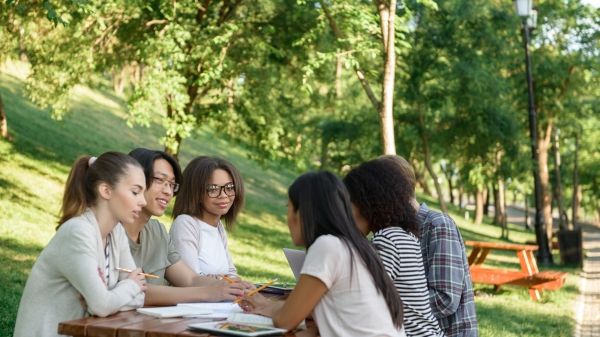
This interactive presentation will introduce a flexible framework for environmental character and 11 different strategies to teach it. Do you want to help college students and their multispecies communities to flourish in an increasingly hot, crowded, and tech-focused world? We’ll discuss teaching virtues and vices that are especially relevant to environmental education, including active hope, socioenvironmental wisdom, and more. You are GUARANTEED to become a better person after engaging with this webinar.
To get a Zoom link and add the event to your calendar, register here.
 Bryan H. Nichols is an Associate Professor of Science and Environmental Education at Florida Atlantic University, a state school in Southeast Florida with a rare triple Carnegie designation: Research 1, Opportunity, and Community Engagement. Bryan has a PhD in Science Education and dual masters in Marine Science and Science Journalism. Nature and wildlife are passions and he has been involved in field research on fishes, bears, wolves, and orca. He has taught groups of varying ages both above and below the water, from British Columbia to Belize, and is currently collaborating with Michelle Petersen, an Everglades biologist at FAU, to infuse environmental character across their respective colleges.
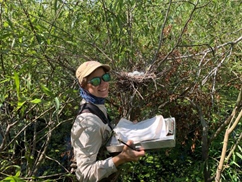 Michelle Petersen is an Assistant Scientist and Director of the M.S. in Environmental Science Graduate Program at Florida Atlantic University, Michelle is an Everglades ecologist whose research focuses on wetland ecosystems, fish communities, and long-term monitoring in the Florida Everglades. She works extensively with large ecological datasets to understand spatial and temporal patterns in fish density, biomass, and habitat dynamics. Her work integrates field-based research with quantitative analysis, and she has contributed to projects examining hydrologic variability, ecosystem restoration, and fisheries ecology across South Florida. Michelle has taught undergraduate and graduate students in ecology, environmental science, and data analysis, and mentoring students in both field and lab settings. She is actively involved in interdisciplinary collaborations at FAU, including efforts to integrate environmental character and ethics into science education, and is committed to advancing student success and engagement in the environmental sciences.
This webinar is funded by ee360+ (a consortium of 26 partners led by the North American Association for Environmental Education and funded by the U.S. EPA).